Monday, January 16, 2012

Pre-primary TLMs for the children of Purulia:

Pre-primary TLMs for the PRADAN students
On 24-25th August, 2011, our trainers went to visit the 32 Primary Centres run by a famous NGO, PRADAN. These centres were at Jhalida Block (one of the most back ward blocks of West Bengal and also in India) under Purulia District.  It was our 1st follow up visit after the completion of Phase-I trainings which was held on 25-29 October, 2010 at Swanirvar.
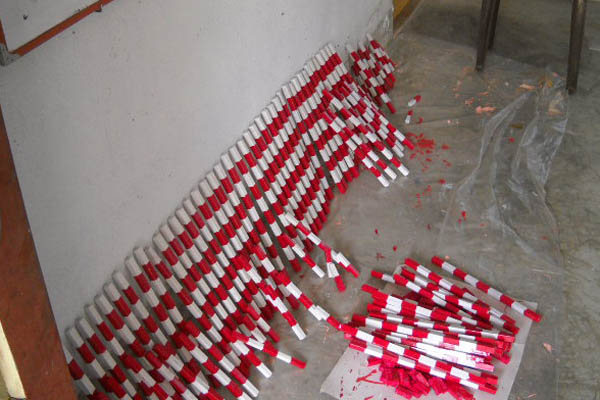
No rod making
            During our visit, we observed that in all the schools had a few children under 5 years old and they were doing nothing in the class. Moreover the teachers had no plan with them and they mostly came by their own timings and spend a few hours in the centres.  We asked the PRADAN officials about these children and came to know that most of their parents went to forest to collect woods leaving their kids in home and most of them send their children to the centres for safety and security. They also requested us to make a plan for these pre-primary children.
            On 19th September, 2011 teachers of the primary schools (run by PRADAN) came for Phase-II training. We took them to pre-primary school at Margurkhali and gave them a short orientation on Pre-primary teaching methodologies and management. They also saw how the children were using TLMs and other classroom activities. After returning back to Purulia the teachers requested the PRADAN’s management to purchase pre-primary TLM sets for their 32 centres. After that we got order from PRADAN to supply 32 sets of TLM for their pre-primary students. Our staff made these sets in 15 days, these were 24 sets of TLMs for the below 4yrs children and 28 sets of TLMs for the comparative senior children. Very soon we will send our staff trainers to assess the TLM use in the centres and they will also give a practical orientation to the teachers on the TLM use in the classroom.

Reported by:
Prosanto Mondal
Swanirvar; Tel: 91 9732829202 

Primary Teachers-training to the children (Class III-IV):

On 13th July, 2011 we visited the Pratap Pur Free Primary School at Durgapur. We were invited by a local NGO, Srreoshi. Srreoshi was the technical partner of Durgapur Alloy Steel Plant and was responsible to implement its CSR projects. Pratappur which was very close to that steel plant was one of the project villages of that CSR project and they were trying to make this village as a model village. One of their main objectives was to develop Pratappur FP schools and made it as a model institution in that locality.   
            After returning Swanirvar, we send them a feedback observation report. We wrote that – the school was lack of teaching learning materials (TLMs), there was no group activity and proper classroom management. But the positive aspect was that the teachers were very enthusiastic to learn and introduce new ideas. We told them to take subject wise trainings from us. They accepted our recommendations and requested us to make a training syllabus for the senior students (class _III & IV) along with the teacher’s trainings.
            Phase _I training from the teachers was held on 30-31 August, 2011. This training was on Bengali and Mathematics for the students of class –I and II. There was a session on TLM development and its use in the class room.  
            On 20-21st October, 2011 we went to Durgapur for giving trainings to the Sr. students. They were given trainings on – Bengali, Mathematics and Art & Craft. They were divided into three groups. Three of our trainers given trainings to these three groups in different class rooms.  Details were given below:
   Gr-A   Class-III   Students-24:
Math: Fraction –concept, Counting – 1-24 Odd, even, gapping counting, Group formation: circle, half circle, Row, small group big group
·         Science: Primary and secondary colour
·         Language: Big words to Small words, Chkra Chart, word making from last letter, sentence making
from chakra chart, pictures and slip cards
·         Song and rhymes
Gr-B Class-IV Students-22
·         Math: Activity based TLM works for Addition and Subtractions , Game on math
·         Language: sentence making as above, sence expansion
·         Song and rhymes
·         Memory games
·         Kulartom( Kathi dance)
Gr- C  Classes: III  and IV   students-25
·         Meditation with a song
·         Origami: chain making, Circle shape with Varity  designs ,Fruits shapes, X-mass tree, Flower-vase, aroplane
·         Friendship  Programe: 12 children actively participated and made 10 letters about themselves with lovely pictures drawing on it. These letters already sent to  England for friendship program.
On 21st Oct, 2011, all the students shared and presented some activities, action rhymes and kathi dance at the end of the training. The management staffs of Alloy steel plant, Srreoshi officials, and Local school teachers were also present.

Remarks
·         Students were energetic, helpful and actively participated in that refresher course.
·         Students had many doubts in their studies; they need such exposure so that they could share their realizations and doubts with others and got new ideas.
·         Some of them obsessed to gender issue but they got focus.
·         We found that some of the students who were not so good in academics but found very innovative in sense of leadership, drawing, singing and hand held activities.
Output:
·         This is new concept to us we are also looking for its outcome.
·         After getting the ideas on school friendship, the students of Pratappur FP have started friendship with a primary School of United Kingdom.
We are planning to introduce such refresher session in our primary schools from the next academic calendar.

Reported by:
Prosanto Mondal
Swanirvar

Thursday, August 18, 2011

Refresher Training for the Primary Teachers of SVVPS, Durgapur-11-16th July,2011

Training on Peer visit and analysis

Training on Art & Crafts
In December, 2010 Deep Ranjini Rai, one of the representatives from VIBHA (our funder) came to meet with us and she visited some of our schools. In our meeting, there was an issue on training of the partner organizations. We had completed the all three Phases (Phase-I&II&III) trainings to the staff of the Durgapur Swami Vivekananda Vani Procher Samity (DSVVPS). Now, it had found that some of the teachers of DSVVPS showing excellent innovative performances in their schools. VIBHA and DSVVPS were now thinking to use them as trainers. So it was decided to give them Refresher training cum TOT. The objectives of this training were as follows:  Although they had received all trainings in three phases but a revision was necessary. We had also made some changes in our training syllabus – the new pedagogy's/methodologies would be taught.
 We had found some gaps, misconceptions and ideas during implementation etc. This refresher would help them come out these situations. After the training they would be able to justify – learning ladder, designing curriculum, efficient class room management, new TLM making etc
 Some of them would be able to work as trainers. They would gain the necessary confidence as a trainer.
 Final evaluation and impact study.
On 11th July, 2011, our trainers, Prosanto Mondal, Gopal Mondal, Julkalam Ali and Biswanath Roy went for six days refresher training. After meeting the ten (10) trainee teachers of SVVPS we had found the follow changes in their schools.

School visit

Discipline:
• Lined up during the prayer time
• If Somebody failed to participate in the prayer, stand up outside school and wait to finish prayer and did the prayer from there
• All the students wear clean dresses, cut nails regularly
• They liked to work in a group
• Everybody knew the reason of absence of his friend
• Students expressed good social gestures (good morning, how are you ?etc.) to teachers and others
Methodology
• Teacher told a story with children before starting a new lesson
• Explained topics with local realities
• Teachers did various puzzle works to avoid monotony
• Teachers used pictures, charts and work cards during their classes
• Teachers used lot of action rhymes and songs
Classroom Managements:
• Sitting arrangements- row basis, circle and half circle
• Answered one by one
• Used various control skills
• Changed of mood through action rhymes, songs, story and drawing
• Teachers developed their works with situation analysis
• Used child to child approach
• Used different TLMs for weak and advance children
Evaluation:
• Open ended questions
• Used charts, pictures and drawing in the question
• Used unseen passage in the questions
• Project evaluation
Details of the six days trainings:
New items discussed with the trainees:
a. Stakeholders of Primary Education
b. Minimum Learning Level –Bengali, mathematics and Environmental Science (Subject and class wise),
c. Learning Ladder
d. Friendship programme.
e. Capacity and expectancy
f. Art & Craft -Photo binding, making toys from wastes, origami etc
g. Audio visual show with interactive discussion.
h. Peer review visit and analysis
i. Lesson Plan; time break ups in class period;
Beside these all the subjective topics of Phase-I,II and III were vividly discussed in these six days. Handheld science experiments.They were also given training on participatory evaluation and monitoring.
Hand held science experiments


Reported by,
Prosanto Mondal
Supervisor

Monday, August 8, 2011

Campaign against Plastic in schools:


Campaign agaist plastic -2004

Hand-made dustbin in public places
In 2004, we organized mass awareness campaigns against the use of poly-bags (thin plastic bags) in our project villages. Our KKB members(mostly adolescence boys and girls) organized rallies, posters, wall writings, leaflets on the evil effects of plastic and its long term impact on environment. There was an interactive discussion on ‘EFFECTS OF PLASTIC AND ITS ALTERNATIVES’ held at Kolsur High School. Students and teachers of some other High schools also participated in that programme. At the end of the programme all were agreed to reduce the plastic use in the daily life.

      We also observed that indiscriminate use of plastic also causing barriers in drainage systems; sometimes these were also taking life of the cattle who were consuming massive amount of plastic bags. We installed handmade dustbins in public places so that we can dump the used plastic bags in a confined place. From the year 2005-06, KKB staff started giving regular inputs in High schools and one of our main successes was to motivate students, teachers and school managements to introduce dustbins in the classrooms. Gradually dustbin-use became very popular and most of the schools started to purchase dustbin from their own funds. (at the initial days this was supported by Swanirvar).


Training to Govt Teachers

In 2009-10, we observed that in each month a huge quantity of garbage were being deposited in the dustbins. So we organized trainings on waste segregation and its reuse. Almost all the schools made compost pits and the bio-degradable waste were kept in these chambers to make manures but the problem was with the non-degradable waste (plastic). Our staff, Alamgir Alam found out solutions for plastic reuse. Mr. Alam a born-artist with innovative creativity, made splendid toys from the waste. He gave trainings to the school students on plastic re-use and making toys from these. In, 2010-11 he had given trainings in 20 High schools and also given hand held trainings to the 8 Govt. teachers from 8 High Schools. He had given trainings to the students of Basirhat College. He had also given such trainings to other NGOs of Birbhum, Howrah and Medinipore.
        At present, the students of these 20 High schools were making toys from the plastic and some of them also showing their innovative skills in making toys.
Toys made by the students
Innovative toys


Reported by:
Samir Biswas
KKB, Supervisor
Tel: 9732574947

Saturday, July 30, 2011

Phase-II trainings given to Right track, Kolkata

In Bengali training session
       On 4th July, 2011 Primary Supervisor, Prosanto Mondal and Master Trainer, Gopal Mondal went for a follow up visit to the 4 centres of Right Track ( a Kolkata based NGO). These centres were mainly for the drop out slum children and also for the weaker children who were less interested in the studies.
       Teachers of the centres took Phase-I training from us. That was held on 6th Dec, 2010 and was ended on 10th Dec, 2010. We had seen some remarkable development after being trained. The second phase training was held at Swanirvar on 26-28th July, 2011. 8 teachers from different centres of Right Track participated in that training.
       There were two fold objectives – 1. How to deals with the dropouts and bringing them into main stream.. 2. Dealing with weaker children.
        We tried to make the trainees understand that to bring the dropouts into main stream they might have to bring into a system that would bring integrity in their students mind and life. We taught them a number of games so that they could use these in classroom. It had been seen that games brought joyfulness in learning.
        They were given modules by which children could get an idea on his/her’s surroundings. Through these they would be able to communicate better with the societies. Gradually they would feel inquisitive on study. Another main objective was to deal with the weak students. We gave training on classroom management and identification of advance and weak students, taking special care for weak children and children with disabilities.
In Math session
        In these Phase-II training session they were given also given trainings on Bengali ( Class-III & IV- Total syllabus)- more stress given on story telling , making story from picture, making picture from story and poem etc, use of Audio visual and methodology on teaching grammar, etc. Mathematics (class-III –IV Total syllabus)- more stress – LCM, HCF, fractions etc and learning through TLMs. Science (Class-III –IV) - classifications of living and non livings, flora and fauna, many hand held experiments, maps making etc. Art & Craft- origami, drawings, group drawings, greetings cards making etc.

** To get detailed training module – contact Primary Supervisor, Prosanto – 09732829202 (M)..

Friday, July 29, 2011

Disciplinary Committee in Zakir Hossain High School:

Swanirvar run 14 per-primary and 4 primary schools. We also gave regular imputs to many ICDS, Sishu Siksha Kendra and Govt Primary schools. One of our main activities was to motivate students to form committees in schools with the responsibilities of cleanliness, Drinking water, sport, library, cultural activities etc.
We also gave inputs to 21 High Schools on Environment Science. We persuaded the Headmasters and Head mistress of these institutions about the importance of student committees in Classroom management as well as school management. We motivated the students and now in many schools student’s committee with the responsibilities of cleanliness, cultural, news, sports, environment management and disciplinary had been formed.
Zakir Hossain High School (one of our partner High School) had a major problem in classroom management. Most of the upper class students (class-IX-X) left the school during the Tiffin time on regular basis. They left the school to take the tuition during the school hour. Another problem was the use of cell phone in the classes. Most of the student brought their cell phones and many of them stated ringing during the class time. That made huge distraction and chaos.
At this situation, the Headmaster discussed with the disciplinary committee members. He requested the committee members to intervene and to stop school leaving during the tiffin time; he also requested them to persuade all the students not to use cell phone in school premises.
The disciplinary committee members persuaded the all the students not to leave school without proper reason. They identified the students who leave during the tiffne time and hold a counseling session with them. They also put posters in each class on the prohibition of cell phone use in the school premises. Presently, the unauthorized school leaving had been reduced remarkable and no one was using cell phone in school.
In the follow up meeting, the Headmaster expressed his gratitude to the student committee members also thanked Swanirvar for motivating the students to form such committees.

Reported by:
Samir Biswas
Tel: 9732574947

Sunday, July 10, 2011

A silent change in a under privilege village life

          Swanirvar, a non Government Organization started its journey from 1990. In the initial days, Swanirvar experimented for several years as to how education could be made enjoyable and how to unleash the creative potential of children. Experiments had been carried out to make education relevant to the immediate context of the rural children, encourage them to ask questions and evaluate them in such a way that it helped them to grow rather than feeling small.

In mid 1990, we carried out a survey on the primary and pre-primary children of Chandalati Village under Kolsur Gram Panchayat of Deganga Block. At that time, Chandalati was famous for supplying Arsenic affected patient to the city hospital. 95% of the total population was Muslim and living below the poverty limit. We found that most of the parents were illiterate and had no much interested in education. At that situation, we started a learning centre, ‘PATHABHABAN’ in that village. We had five objectives behind this:

1. To assist the poor and weaker children in their studies.

2. To use local and available materials as teaching – learning materials

3. To make them aware on local history, geography and culture.

4. To encourage the creative activities amongst the children.

5. To bring an environment so that the student got the values of Education (group activity, tolerance, morality etc)

Our PATHABHABAN model became very popular. In 1992, we converted PATHABHABAN into a pre-primary school (for class I-IV). Vikramshila Education Resource Society gave us initial trainings to our teachers. We never gave stress to the regular syllabus, but we gave more stress on learning from the surroundings. From 1996, a new primary department started in that school. The difference of our school is listed below:

Activities in Govt. School:
• Syllabus oriented – classroom based teaching.
• No classroom decoration- no use of chart, poster in the classroom.
• Inadequate use of Teaching Learning Materials( TLMs)
• No sitting plan, use of benches in most of the schools – no group activities
• Teachers don’t encourage – creative activities like singing, dancing, drama, painting etc
• In many schools, special days are being celebrated but these are not planned by the student, they have very minimum role in school programme.
• No library facility.
• No strategy for managing the advance and weaker students and student with physical and mental difficulties.
• Most of the schools do not have sufficient teachers in comparison with student numbers.
• School in-charge (head of the school) are busy with non-academic activities throughout the year.
• Teachers get trainings but the new methods are not introduced due to lack of follow up and motivation by the superiors.
• Parents are not involved in the Education system.

Activities in our School:
• Adequate no of TLMs in the classroom and use of TLMs.
• Group activities.
• Learning local History, Geography and Environment and culture. Map making, survey etc
• Decorated classroom- use of chart poster in the classroom
• Encourage in paintings, dancing, drama and all kind of cultural activities, Sahitya sabha, wall painting, etc.
• Hand held experiments in science classes.
• Separate class room for – English study.
• Children committees for cleanliness, library, drinking water & sanitation, sports, notice board, etc.
• Special days celebrating by the children.
• Involving parents and ex-students by regular meetings and workshops.
• Pen friendship with local and international schools.
• Special class on Art & Craft.
• Annual sports, field trip etc
• Regular writings by the children
• Use of Audio-visual equipments in the classes.
• Workshop with teachers; teachers empowerment trainings
• Regular follow up, cross visit etc child to child approach
• Special attention for the advance and weak children.

From 1996 to till this year, more than 500 students had come out from that village and its surrounding hamlets. In, June 2011 we made a review committee to analyze the impacts of our activities and its effects on the societies. We had found the followings:
1. The students learnt many hand held activities in school, like measurement, survey, seed collection etc. They had found its applications in their life. Most of them are now farmers or doing business. They had found the utility of measurement, survey etc in their life.
2. We had regular cultural activities, Sahitya Sabha in our school. Now some of our students had become famous in High Schools and colleges for their creative writings and singing.
3. There were sessions on drawings, map makings etc in the schools. Our students who are now in high schools, colleges and in Universities had expressed the usefulness in their future studies.
4. We had children committees in our school and these committees had specific roles and responsibilities. Some of our students who are now in active politics and are representing their societies have found its usefulness. Most of our ex-students had claimed that they did not have any toilets in their homes but they had forced their parents to make latrine with help of local Panchayat. They were inspired by the cleaning committee programme.
5. Chandalati was a Muslim dominated village. There was a social prohibition on playing drums and music and dancing, etc. But school had helped them to come out from these barriers. Presently, many of our students who were now in high schools and colleges were regularly performing dance, drama and playing drum etc Some of them were representing their present institutions, too.
6. Our ex-students also told that they were helping the younger brother and sisters in their studies. Some of them also take classes in our schools.
7. One of our main successes was to involve the parents in education system. We gave more stress on local history, Geography and Environment studies. The students got the data from their parents that had made the parents more inquisitive on school education. Many parents came in the parents meetings and also were involved in the workshops. We made such an environment in these meetings and workshops so that a so call illiterate mother also got scope to covey her opinions in the meetings.

Reported by:
Evaluation Team, Swanirvar